10 Futuristic Gadgets That Could Change Everyday Life
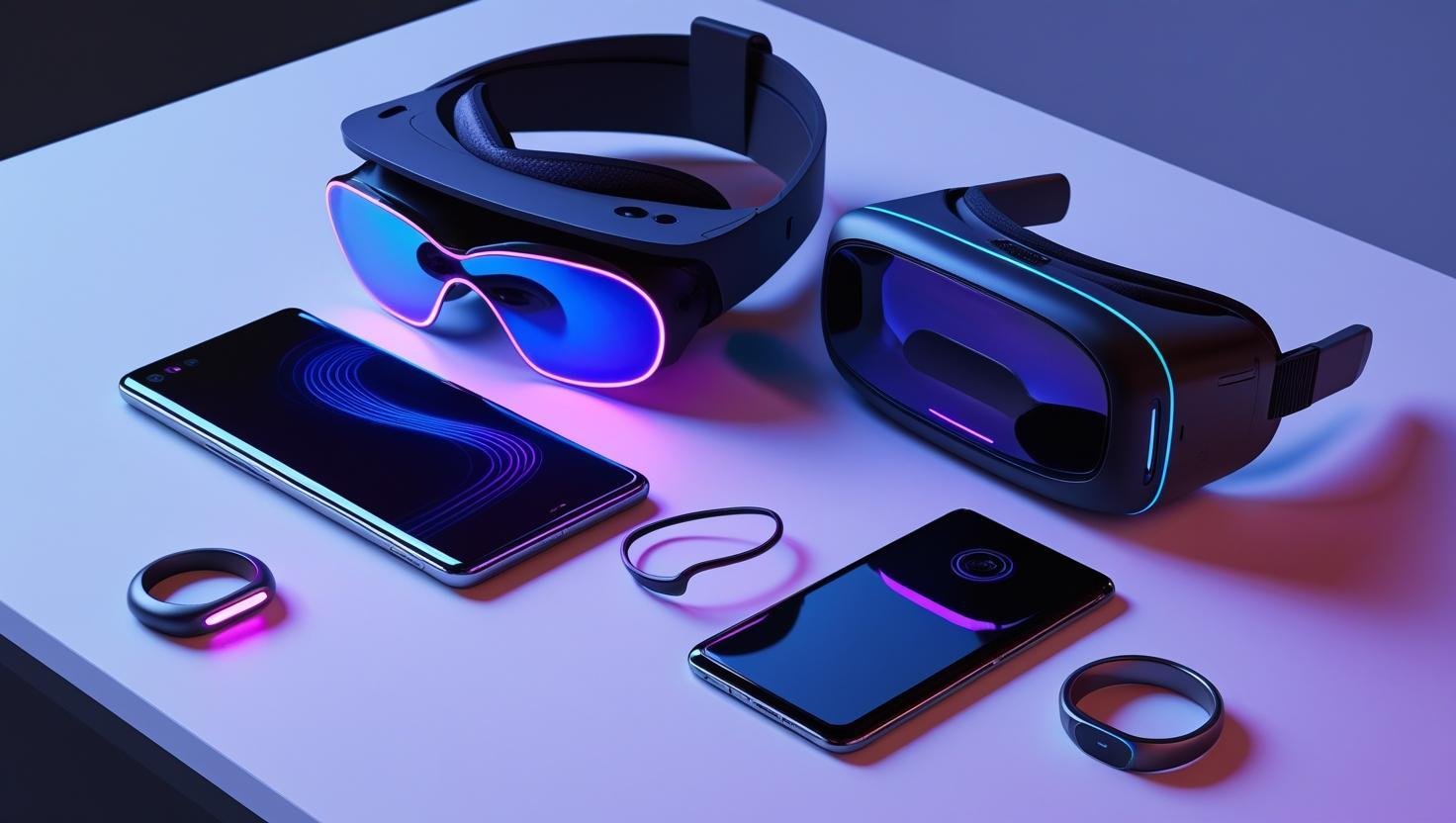 10 Futuristic Gadgets That Could Change Everyday Life
Technology has a funny way of making the impossible feel ordinary.
Not long ago, talking to a computer, paying with a watch, or controlling your lights from another country sounded like something from a science fiction movie. Today, millions of people do these things without thinking twice.
And the next wave of futuristic gadgets could be even more interesting.
We're moving toward a world where technology doesn't just sit on our desks or inside our pockets. It becomes part of our clothing, our homes, our health routines, and the way we interact with the world.
Here are 10 futuristic gadgets worth watching, including products that already exist and emerging technologies that are still finding their place.
1. AI Smart Glasses: A Digital Assistant in Your Field of View
Imagine walking through an unfamiliar city and asking your glasses what building you're looking at.
Or imagine cooking dinner while getting hands-free instructions without constantly checking your phone.
That's the appeal of AI-powered smart glasses.
Products such as Ray-Ban Meta smart glasses have already demonstrated how cameras, microphones, speakers, and AI assistance can fit into everyday eyewear. Other devices are exploring displays that can place useful information directly in front of your eyes.
Why they matter: Smart glasses could make everyday digital tasks feel more natural and hands-free.
The challenge: Privacy, battery life, comfort, and social acceptance remain important considerations.
2. Smart Rings: Powerful Technology in a Tiny Package
Smartwatches have become familiar, but not everyone wants a screen strapped to their wrist.
Smart rings offer a different approach.
Devices such as the Oura Ring and Samsung Galaxy Ring can collect information about sleep, activity, and other wellness-related measurements, depending on the model.
Their biggest advantage is simplicity. You can wear one while sleeping, working, or traveling without constantly interacting with another screen.
In the future, smart rings could become more useful as sensors, battery efficiency, and software improve.
Why they matter: They make wearable technology less distracting.
The challenge: Sensor readings are estimates, and smart rings aren't substitutes for medical diagnosis.
3. Personal Robot Assistants: More Than a Robot Vacuum
Robot vacuums have already shown that people appreciate machines that handle repetitive household chores.
But what if a robot could do more?
Developers are experimenting with mobile and humanoid robots capable of navigating rooms, recognizing objects, and performing basic physical tasks.
The long-term vision includes robots that help carry items, organize spaces, and assist people with everyday activities.
However, there's an important distinction between an impressive demonstration and a reliable household product.
Why they matter: Helpful robots could save time and support people who need assistance.
The challenge: Cost, safety, reliability, and operation in unpredictable homes are major obstacles.
4. AR Glasses: Bringing Digital Information Into the Real World
Augmented reality, or AR, adds digital elements to what you see around you.
Imagine looking at a broken appliance and seeing a repair diagram overlaid on the machine.
Or imagine rearranging furniture virtually before buying anything.
AR devices could make these experiences possible without forcing users to switch between the physical world and a separate screen.
Some existing products focus on wearable virtual displays, while more advanced AR systems attempt to anchor digital objects to real environments.
Why they matter: AR could transform learning, navigation, design, and technical work.
The challenge: Truly lightweight, affordable, all-day AR glasses remain difficult to build.
5. Foldable and Rollable Screens: Devices That Adapt to You
For years, smartphones followed a predictable design: a flat rectangle with a screen.
Foldable phones changed that expectation.
Now manufacturers are exploring devices with multiple folds, expanding displays, and rollable-screen concepts.
The idea is simple: a compact device when you're moving, a larger workspace when you need it.
This could be especially useful for reading, multitasking, editing documents, and watching videos.
Why they matter: Flexible displays offer more screen space without always requiring a larger device.
The challenge: Durability, repair costs, thickness, and price can limit their appeal.
6. Smart Home Energy Systems: Homes That Waste Less Power
Some of the most valuable futuristic gadgets may not look futuristic at all.
Smart plugs, connected thermostats, home energy monitors, and intelligent lighting systems can help people understand and manage electricity consumption.
More advanced systems may coordinate solar panels, home batteries, and major appliances to reduce waste or shift electricity use to more suitable times.
For example, a home energy system might suggest running certain appliances when solar production is high.
Why they matter: Better energy management can improve convenience and potentially reduce costs.
The challenge: Savings depend on electricity prices, local infrastructure, equipment costs, and how the system is configured.
7. Portable AI Translators: Breaking Down Language Barriers
Traveling somewhere you don't speak the language can be exciting—and occasionally frustrating.
AI translation earbuds and handheld translators aim to make conversations easier.
These devices use speech recognition, machine translation, and audio output to help people communicate across languages.
The technology can be useful for travel, international business, and everyday interactions.
But even advanced translation systems can misunderstand accents, idioms, technical vocabulary, or cultural context.
Why they matter: They could make communication more accessible.
The challenge: Accuracy, internet dependence, latency, and privacy still matter.
8. Smart Health Patches: Wearables Beyond Watches
Not every wearable needs to be a watch, ring, or pair of glasses.
Smart patches are small devices worn against the skin that can monitor specific measurements.
Continuous glucose monitors are already an established example of wearable sensor technology. Researchers and companies are also exploring additional kinds of skin-mounted sensors.
Future patches could become smaller, more comfortable, and easier to integrate with health apps.
Why they matter: Continuous measurements can provide useful trends that occasional checks may miss.
The challenge: Different sensors have different levels of clinical validation. Not every experimental patch is a proven medical product.
9. Compact Projectors and Spatial Displays: A New Way to Use Screens
Imagine turning a blank wall into a movie screen or presenting information without carrying a large monitor.
Portable projectors already make this possible in certain environments.
New display concepts are also exploring spatial interfaces, glasses-free 3D effects, and more immersive ways of presenting information.
These technologies could change how people collaborate, learn, play games, and consume entertainment.
Why they matter: They offer alternatives to conventional flat displays.
The challenge: Brightness, viewing conditions, resolution, cost, and portability affect the experience.
10. Brain-Computer Interfaces: Controlling Technology in New Ways
Perhaps the most ambitious technology on this list is the brain-computer interface, often shortened to BCI.
A BCI attempts to interpret certain brain signals and convert them into commands for a computer or another device.
Researchers are developing systems that may help people with severe physical disabilities communicate or control digital interfaces.
This is a serious area of medical and scientific research, not simply a futuristic consumer accessory.
Why they matter: BCIs could create new accessibility options for people who cannot use conventional input devices.
The challenge: Safety, accuracy, long-term reliability, privacy, and ethical questions are significant.
Which Futuristic Gadgets Will Become Popular First?
Not every futuristic invention will become a mainstream product.
Some technologies are already practical, while others need years of engineering improvements.
Smart rings, AI-enabled glasses, and home energy devices have a head start because consumers can already buy products in these categories.
Household robots and advanced AR glasses have exciting potential, but they face more difficult hardware and usability challenges.
Brain-computer interfaces may have profound benefits in specialized medical applications, although their development follows a very different path from ordinary consumer electronics.
The gadgets most likely to succeed aren't necessarily the ones that look the most impressive.
They're the ones that solve real problems at a price people can justify.
What Should You Consider Before Buying Futuristic Tech?
A futuristic gadget can be exciting, but excitement alone isn't a good reason to buy one.
Before spending money, consider:
Practical usefulness: Will you actually use it regularly?
Compatibility: Does it work with your phone, computer, and existing devices?
Privacy: What information does it collect, and where is that information stored?
Software support: Will it continue receiving updates?
Repairability: Can it be repaired or serviced if something breaks?
Long-term cost: Are subscriptions, accessories, or replacement parts required?
A well-designed device should make life easier—not introduce unnecessary complications.
Final Thoughts: The Future Is Already Taking Shape
The most exciting thing about futuristic gadgets is that the future rarely arrives all at once.
It happens through small improvements.
A ring becomes a useful sleep tracker. Glasses become a hands-free assistant. A home learns to use electricity more efficiently. A medical interface helps someone communicate in a new way.
Some of these innovations will become everyday essentials. Others may remain expensive, experimental, or limited to specialized uses.
Either way, they're changing what we expect technology to do.
And perhaps the most interesting question isn't what gadgets will look like in ten years.
It's which ones we'll eventually wonder how we ever lived without.
Explore more practical technology guides and free online tools at NextGad.com.
Frequently Asked Questions
What are futuristic gadgets?
Futuristic gadgets are devices that use emerging or advanced technologies to introduce new ways of working, communicating, learning, or managing everyday tasks.
What are some examples of futuristic gadgets?
Examples include AI smart glasses, smart rings, augmented reality devices, foldable displays, household robots, and wearable health sensors.
Are futuristic gadgets available to buy today?
Some are already available, including smart rings, AI-enabled glasses, foldable phones, and portable projectors. More advanced household robots and certain brain-computer interfaces remain limited or experimental.
Which futuristic technology could have the biggest impact?
That depends on the problem being solved. AI wearables may improve everyday convenience, while robotics and brain-computer interfaces could have major long-term implications for accessibility and physical assistance.
Are futuristic gadgets worth buying?
They can be worth buying when they solve a specific problem, offer reliable performance, and fit your budget. It's usually wise to evaluate independent reviews and ongoing software support before purchasing.