Meta VR Glasses (2027): Price, Specs & Features
 Meta VR Glasses (2027): Price, Specs, Features, and Why They Could Change the Future of VR
Updated: November 2026 | NextGad Tech
Imagine sitting in a coffee shop, opening three giant virtual monitors, and getting to work without carrying a single physical display.
Or picture yourself watching a movie on a cinema-sized screen while sitting comfortably on an airplane.
For years, virtual reality companies have promised experiences like these. The problem? Most VR headsets are still too bulky for many people to wear comfortably for extended periods.
Meta thinks it has found a different approach.
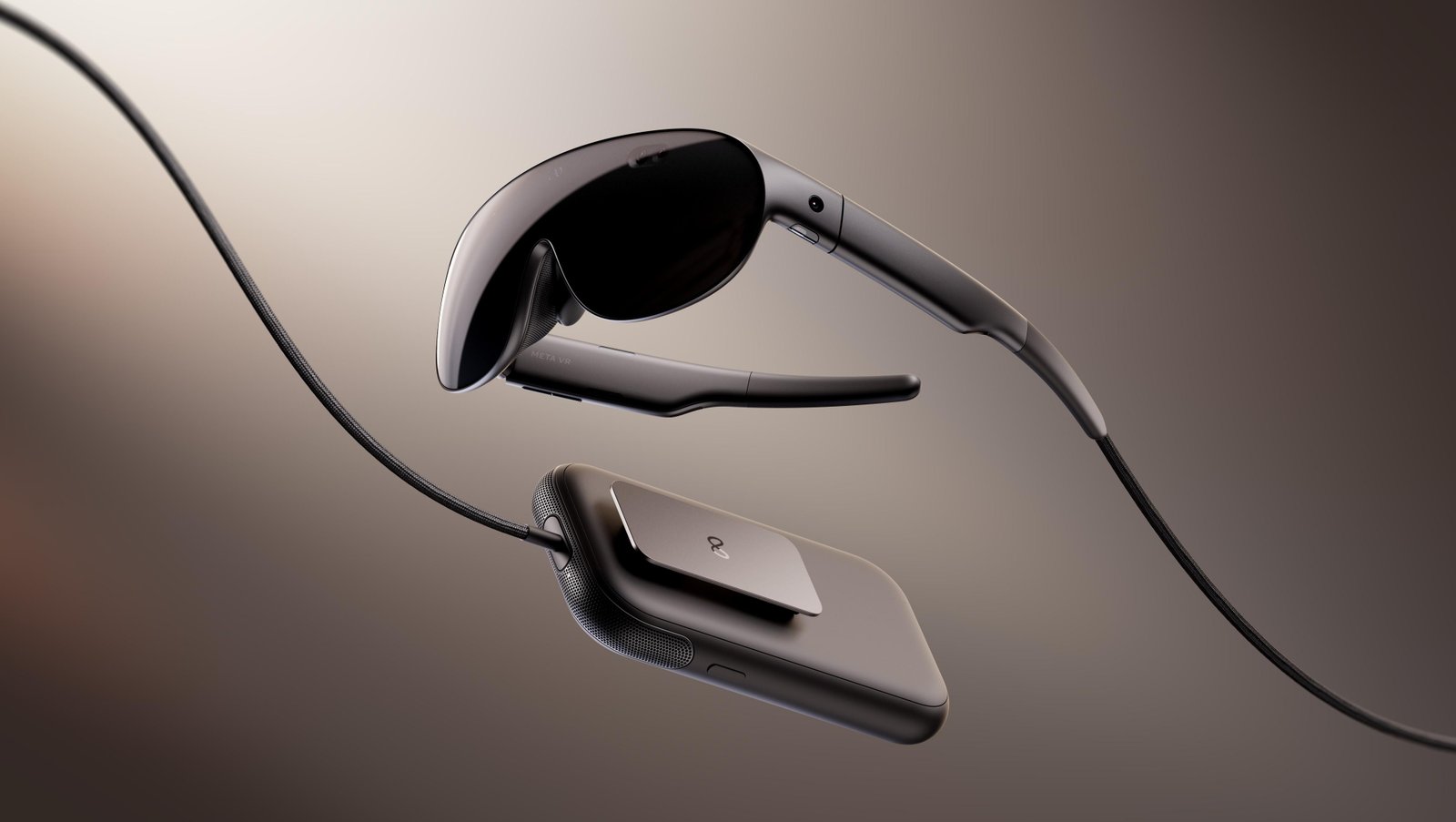
Its upcoming Meta VR Glasses, scheduled for spring 2027, move much of the processing hardware into a separate pocket-sized device. The result is a pair of glasses weighing approximately 100 grams.
That sounds impressive. But the more interesting question is whether this design could finally make virtual reality useful beyond gaming.
Let's take a closer look.
What Are Meta VR Glasses?
Meta VR Glasses are an upcoming mixed-reality device designed to combine the capabilities of a VR headset with a lighter, glasses-style form factor.
Unlike conventional all-in-one headsets, they use two connected components:
Lightweight glasses containing displays, cameras, and tracking sensors.
A separate compute puck containing the processor, battery, and other essential hardware.
The two components are connected by a cable.
This approach removes much of the weight that would otherwise sit directly on your face.
It's an interesting compromise. You still need to carry an additional device, but the glasses themselves are significantly lighter than a traditional VR headset.
Meta plans to release the product in spring 2027, with a starting US price of $1,299.99.
Meta VR Glasses Specifications
Here's what has been announced about the hardware.
| Feature | Meta VR Glasses |
|---|---|
| Expected release | Spring 2027 |
| Announced US price | $1,299.99 |
| Glasses weight | Approximately 100 grams |
| Processor | Snapdragon Reality Elite |
| Display | Dual micro-OLED |
| Resolution | 2412 × 2288 per eye |
| Refresh rate | Up to 120Hz |
| Field of view | 70° horizontal × 66° vertical |
| RAM | 12GB |
| Storage | 128GB, with microSD expansion |
| Tracking | Head, eye, and hand tracking |
| Operating system | Meta Horizon OS |
| Battery | Up to 3 hours of media playback |
| Charging | 45W fast charging |
Specifications reflect announced information as of November 2026. Actual performance and availability may vary.
1. The Biggest Innovation Is the Design
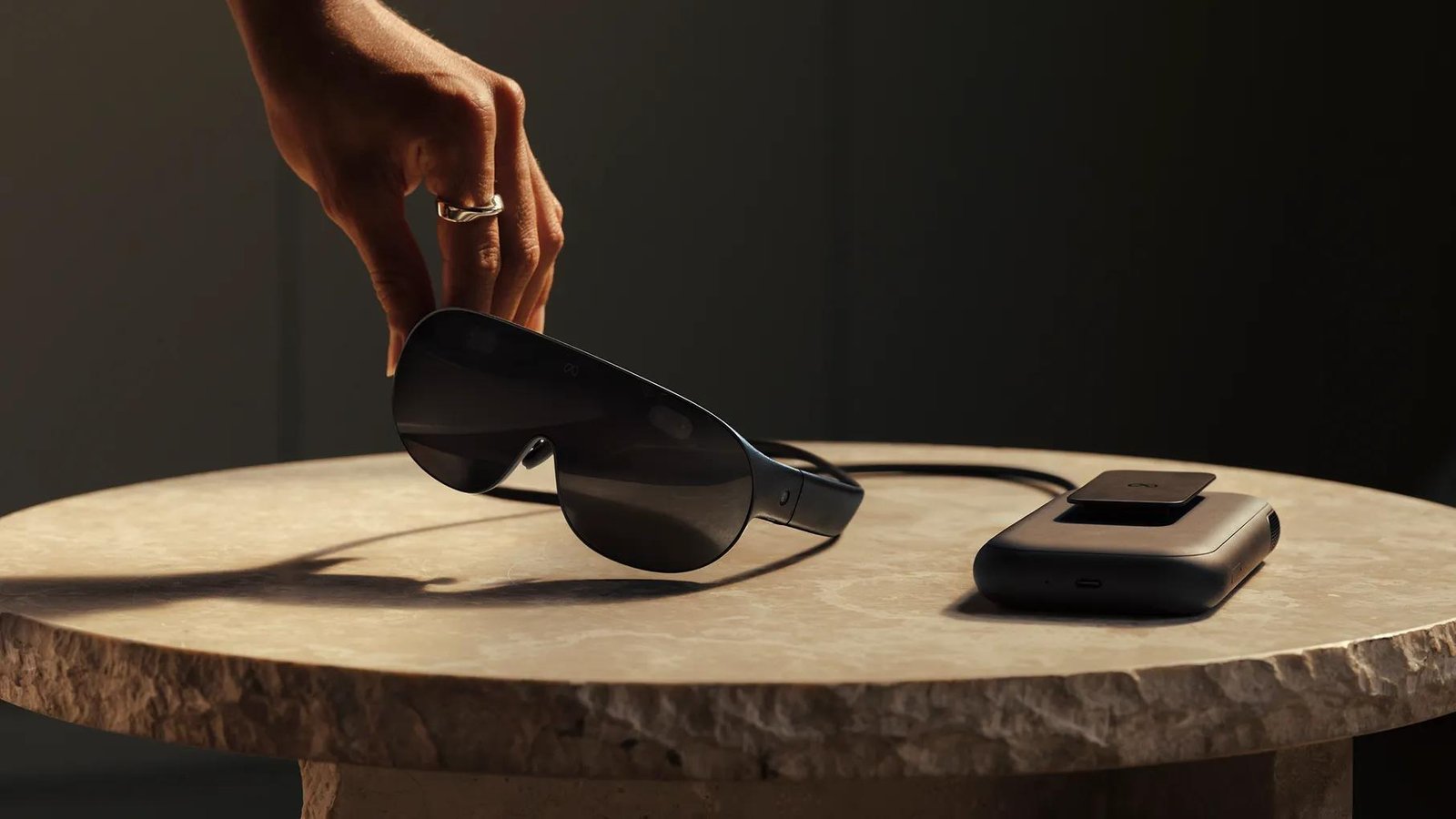
The first thing that makes Meta VR Glasses interesting isn't the screen or processor.
It's the weight.
Anyone who has used a traditional VR headset knows that comfort can become an issue after a while. Even a technically impressive device can feel inconvenient when you're wearing substantial hardware on your face.
Meta's solution is to move the heavier components elsewhere.
The glasses contain the parts needed for viewing and tracking, while the external puck handles computing, power, and storage.
This changes how the device feels on your face, but it doesn't eliminate the hardware entirely.
You'll still have a cable running from the glasses to the puck, and you'll need somewhere to carry that puck.
For some people, that will be a reasonable trade-off. Others may prefer the simplicity of a completely self-contained headset.
The real test will be how comfortable the entire setup feels after an hour or two of everyday use.
2. A 5K Display That Could Make Virtual Screens More Practical
Meta VR Glasses feature dual micro-OLED displays with a resolution of 2412 × 2288 pixels per eye.
They also support refresh rates up to 120Hz.
These specifications matter because virtual screens need to be sharp enough for more than watching movies.
Imagine trying to read a spreadsheet, edit a document, or work with several browser windows. If the text looks blurry, the experience quickly becomes frustrating.
Meta is positioning its display technology as a solution for both entertainment and productivity.
The device also supports Dolby Vision and Dolby Atmos, making immersive movies another major selling point.
However, there's an important limitation.
The glasses have a narrower field of view than a traditional headset such as Meta Quest 3.
That means you won't necessarily feel surrounded by a virtual environment in quite the same way.
For movies and desktop work, that compromise may be acceptable. For people who want maximum immersion in VR games, it could be a significant drawback.
3. Your Desk Could Become a Virtual Keyboard
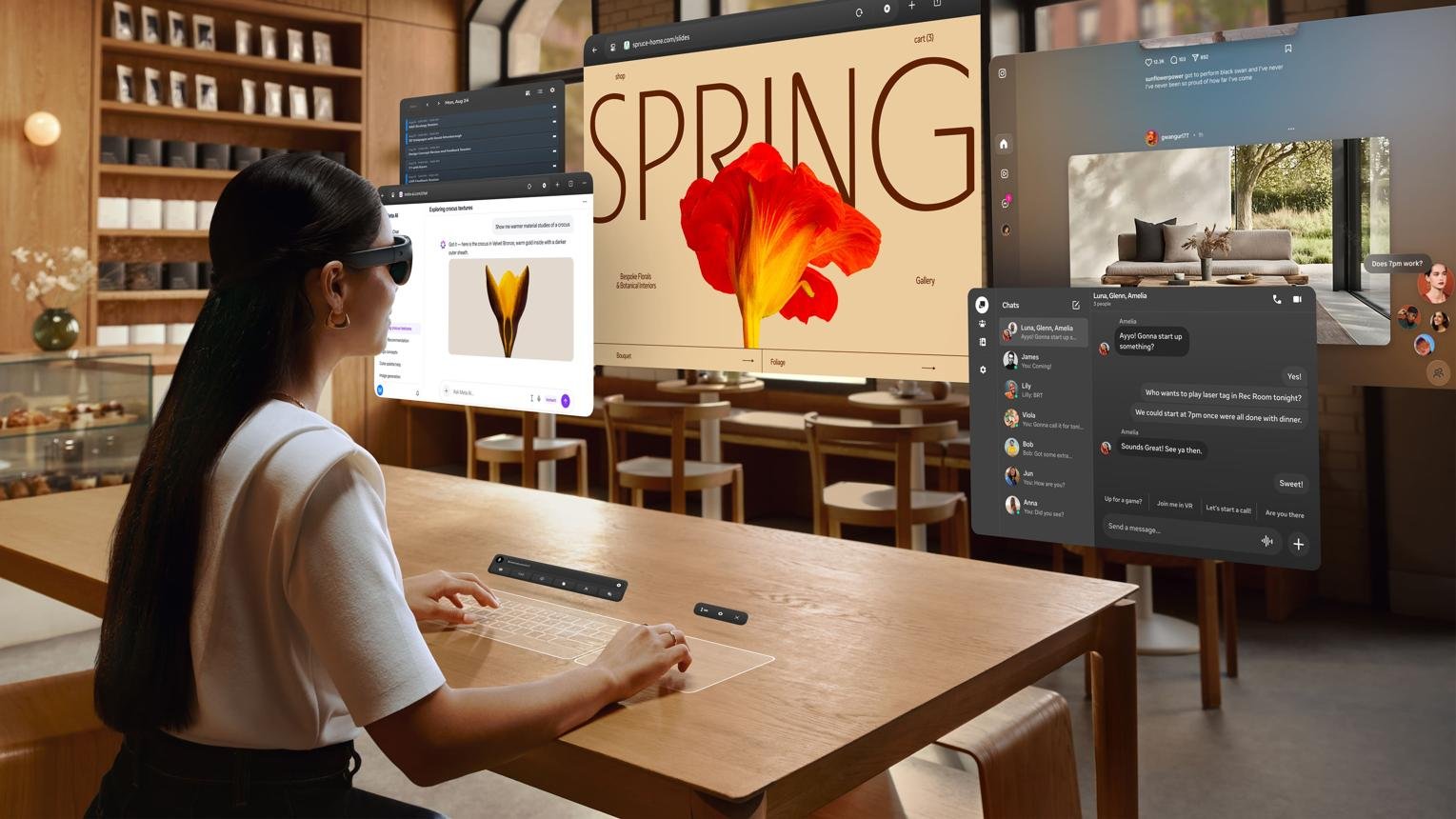
One of the most intriguing features is Meta's virtual keyboard and touchpad system.
Instead of carrying a physical keyboard, users can interact with a keyboard mapped onto a flat surface.
Imagine sitting at an empty table.
You put on the glasses, open a virtual workspace, and use the tabletop as your typing surface.
The idea is surprisingly practical.
Traditional virtual keyboards often require users to tap floating keys in the air. That can feel awkward, especially when writing longer messages.
Using a real tabletop gives your fingers a physical surface to touch.
Of course, this doesn't automatically mean the experience will match a high-quality mechanical keyboard.
Typing accuracy, comfort, and reliability will matter enormously.
Still, it's the kind of feature that makes mixed reality feel less like a novelty and more like a potential everyday tool.
4. Multiple Virtual Monitors Without Carrying Monitors
For many people, the most exciting feature won't be gaming.
It will be the workspace.
Meta VR Glasses are designed to create multiple virtual screens around the user.
Think about someone who works remotely and regularly travels between home, hotels, and coffee shops.
A laptop is convenient, but its limited screen space can make multitasking difficult.
With a virtual workspace, that person could potentially spread applications across several large displays without packing additional monitors.
A writer might keep research open on one screen and a document on another.
A developer could have code, documentation, and testing tools visible simultaneously.
A student might watch a lecture while taking notes.
These are practical scenarios, not just futuristic demonstrations.
However, virtual monitors will only be useful if text remains readable, the connection works reliably, and the glasses are comfortable during extended sessions.
Those are questions that independent testing after launch will need to answer.
5. Eye Tracking, Hand Gestures, and Meta AI
Meta is also changing how people interact with its VR platform.
Rather than requiring controllers for everyday tasks, the glasses use eye tracking, hand gestures, and voice input.
You can look at an interface element, select it with a gesture, or speak to Meta AI.
This could make basic actions feel more natural.
For example, opening an application or adjusting a virtual screen might become as simple as looking at it and making a small hand movement.
The device runs Meta Horizon OS, which connects it to Meta's existing VR software ecosystem.
Optional Quest Touch Plus controllers are supported for experiences that need them.
That flexibility matters.
Not every application works equally well with hand tracking, and some games benefit from physical controls.
There are also privacy questions worth considering. A device that uses cameras, eye tracking, and an AI assistant needs clear explanations of how information is processed and protected.
6. Movies, Sports, and Gaming Could Be Major Attractions
Meta isn't marketing these glasses solely as a productivity device.
Entertainment is a major part of the experience.
The company has announced support for immersive movies, streaming services, and live sports experiences.
Meta also says more than 75 games are planned to support hand-based interaction at launch.
For someone living in a small apartment, the idea of enjoying a huge personal movie screen without buying a television is appealing.
Travelers could also benefit from having a private entertainment display.
But there are practical questions.
How comfortable will the glasses feel during a full movie?
Will the battery last long enough?
And how much will the experience depend on specific apps, subscriptions, or regional availability?
Meta advertises up to three hours of continuous high-resolution media playback.
That may be enough for many movies, but it isn't unlimited.
7. Meta VR Glasses vs Apple Vision Pro: Two Different Approaches
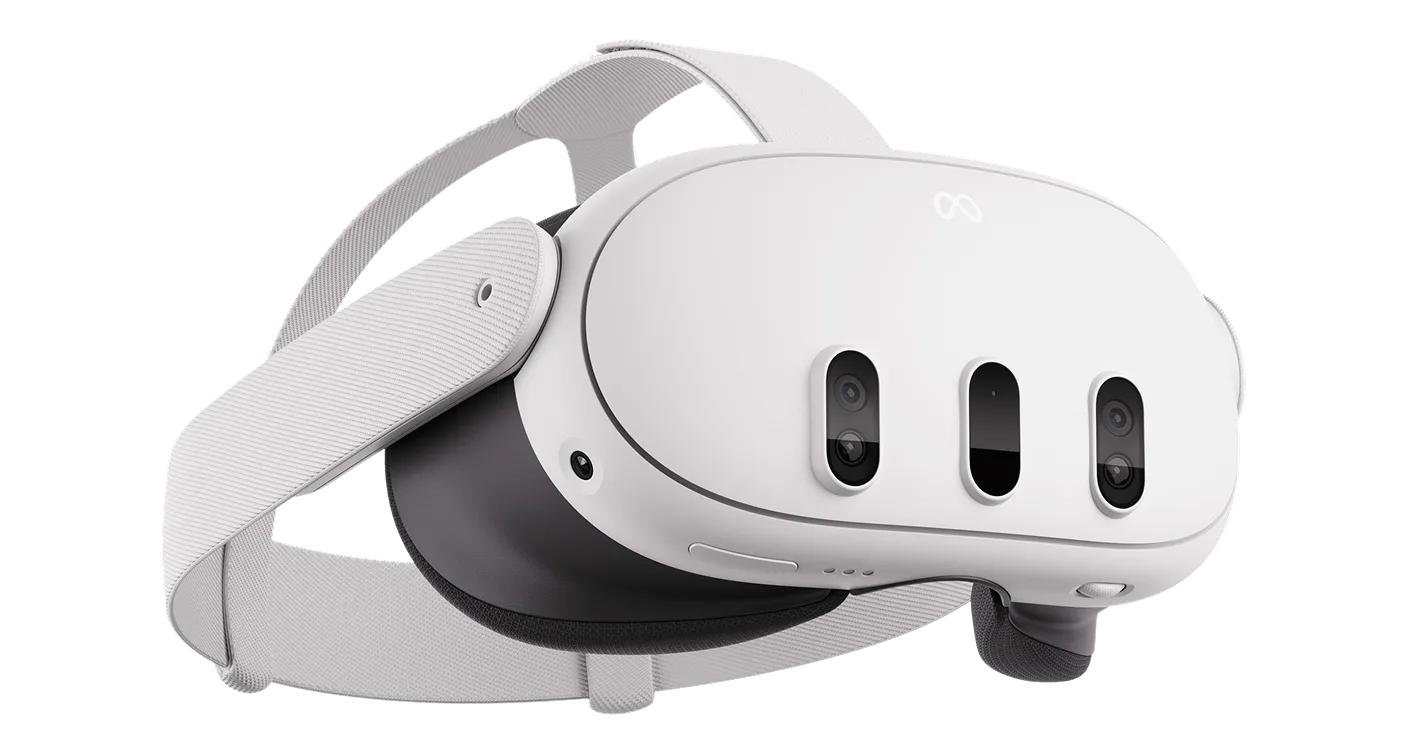
Apple Vision Pro helped demonstrate what high-end spatial computing could look like.
Its emphasis on immersive displays, eye tracking, and spatial interfaces showed the potential of the category.
But devices like Vision Pro also highlight the difficulty of balancing performance, weight, comfort, and cost.
Meta VR Glasses approach the problem differently.
Instead of keeping most components inside a headset, Meta separates the glasses from the computing hardware.
That makes the face-worn portion lighter.
The trade-off is a tethered external puck and a smaller field of view.
Neither approach is automatically better for everyone.
Someone who prioritizes immersion may prefer a traditional headset.
Someone who values portability and long-session comfort may find Meta's design more appealing.
Technology reviewer Marques Brownlee has also highlighted this design direction, describing the glasses as an interesting alternative to what a future Vision Pro might have become.
That comparison is an opinion about product design, not confirmation of Apple's future plans.
8. What Are the Biggest Limitations?
Meta VR Glasses look promising, but there are several reasons to remain cautious.
The price is still high
At $1,299.99, this is a premium product.
For most consumers, that's a substantial amount to spend on a device that doesn't replace their smartphone or laptop.
The compute puck adds complexity
Moving hardware away from the face helps with weight, but users still need to carry the puck and manage its cable.
The field of view is narrower
A 70-degree horizontal field of view is a meaningful compromise compared with wider traditional VR headsets.
Battery life has limits
Up to three hours of media playback sounds useful, but actual battery life may depend on the workload.
Real-world comfort remains to be proven
The glasses may weigh only around 100 grams, but fit, heat, optics, and extended use will still determine how comfortable they feel.
These limitations don't make the product unsuccessful. They simply show that lightweight VR still involves engineering compromises.
9. Who Should Consider Meta VR Glasses?
The product could be especially interesting for three types of users.
Remote workers and frequent travelers: People who want multiple virtual displays without carrying physical monitors.
Movie and entertainment enthusiasts: Users interested in a large private screen for films, streaming, and immersive sports.
Early technology adopters: People who enjoy experimenting with new interfaces and are comfortable paying a premium for emerging hardware.
On the other hand, someone primarily interested in affordable VR gaming may find an existing Quest headset a more practical option.
And anyone expecting completely wireless everyday smart glasses should understand that Meta VR Glasses are a different category of product.
10. Could This Be the Future of Virtual Reality?
The biggest question surrounding Meta VR Glasses isn't whether the hardware is impressive.
It's whether the design makes people want to use VR more often.
The industry has spent years improving display resolution, tracking, and processing power.
Those improvements matter, but they don't solve every problem.
A device can deliver stunning visuals and still be inconvenient to wear.
Meta's lightweight design suggests a different priority: making advanced mixed reality easier to incorporate into ordinary activities.
If the virtual workspace proves reliable, the glasses could appeal to people who never considered buying a traditional VR headset.
If the entertainment experience is compelling, they could also attract customers who simply want a portable personal cinema.
But the price, cable, and narrower field of view may limit mainstream adoption.
The most interesting part of this product is the direction it represents.
Instead of asking how much technology can fit into a headset, Meta is asking how much technology can be moved out of it.
That could influence future generations of mixed-reality devices.
Frequently Asked Questions
When will Meta VR Glasses be released?
Meta has announced a spring 2027 launch window. An exact retail release date has not been confirmed here.
How much will Meta VR Glasses cost?
The announced starting price in the United States is $1,299.99.
Are Meta VR Glasses completely wireless?
No. The glasses connect to an external compute puck through a cable.
Can Meta VR Glasses replace a laptop?
They can provide a virtual workspace, but they should not automatically be considered a complete laptop replacement. Their usefulness depends on supported applications, connections, and workflows.
Can you play VR games on Meta VR Glasses?
Yes. Meta plans support for VR games, including hand-tracked experiences. Compatible physical controllers are also supported separately.
Are Meta VR Glasses the same as Ray-Ban Meta smart glasses?
No. Meta VR Glasses are a display-equipped virtual and mixed-reality device connected to a compute puck. Ray-Ban Meta smart glasses belong to a different product category.
Final Thoughts
Meta VR Glasses might be one of the most interesting mixed-reality products arriving in 2027.
Not because they promise an entirely new digital world, but because they attempt to solve a very ordinary problem: wearing a bulky headset isn't always comfortable.
The 100-gram design, high-resolution displays, virtual monitors, and tabletop keyboard suggest a future where spatial computing becomes more portable and practical.
There are still important compromises, especially the premium price, external puck, and narrower field of view.
For now, Meta VR Glasses are a product worth watching rather than an automatic purchase recommendation.
We'll know much more once independent reviewers can test the final retail hardware.
What do you think? Would you spend $1,300 on lightweight VR glasses, or would you rather wait for the technology to become more affordable?
Further Reading
Editorial note: This article is based on Meta's announced specifications, publicly available reporting, and analysis of Marques Brownlee's hands-on video. NextGad has not independently tested the device.